
Auburn EV Charger Installation Combined with 200-Amp Upgrade Powers High-Speed Home Charging
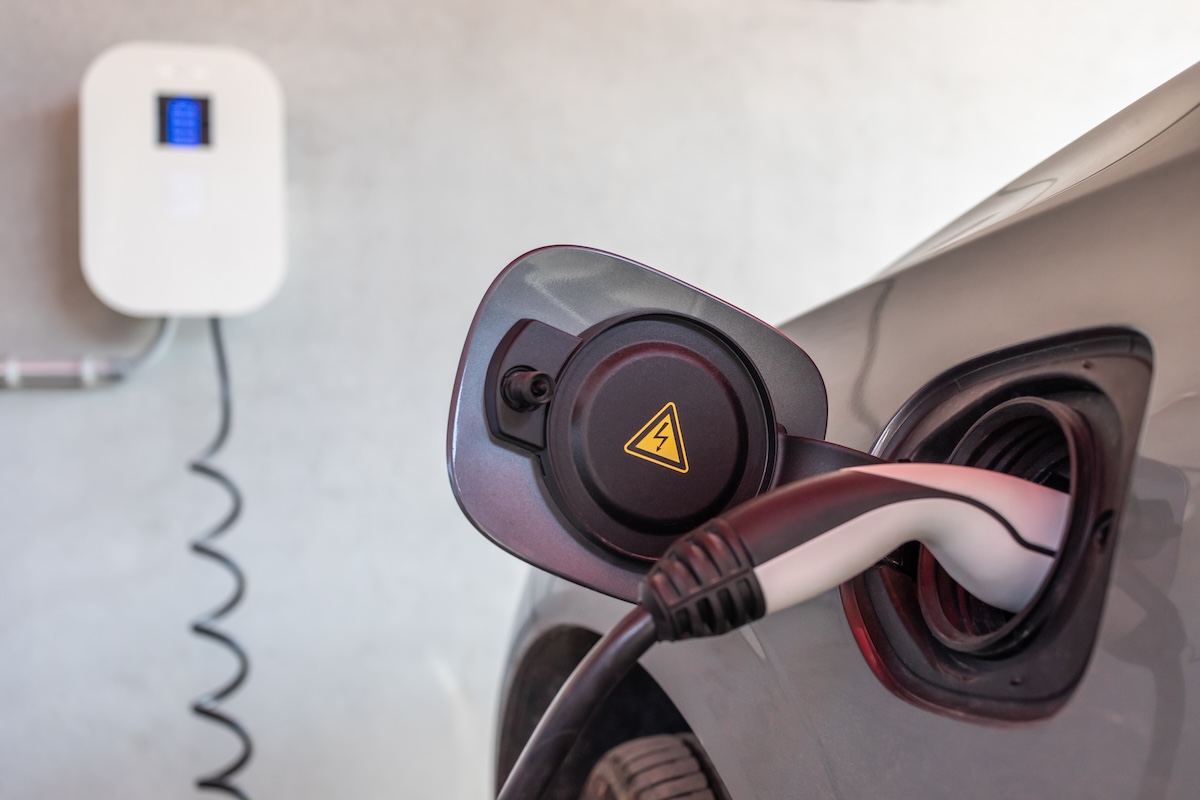 A homeowner in Auburn, MA, recently reached out after buying a new electric vehicle. Like many people making the switch to EVs, they assumed installing a charger would be similar to installing a dryer or dishwasher— all you have to do is plug it in, right? In reality, EV charging places a sustained demand on the electrical system that older panels often weren’t designed to support. That meant the first step was to determine whether the home’s existing electrical service had the capacity to handle it safely.
The home still had its original 100-amp panel, and while that had worked fine for years, it wasn’t designed to handle the steady, high draw of a Level 2 EV charger. Upgrading from 100 amps to 200 amps isn’t flashy. You won’t see it once the cover is back on the panel. But it makes all the difference when you’re charging a vehicle overnight while your air conditioner, dishwasher, and dryer are all running. By handling the service upgrade and charger installation together, we provided this home with a safe, permanent solution rather than a short-term workaround.
Managing Continuous Load on an Older Panel
The project started with a simple question: “Can I install a Level 2 charger on my current panel?” After reviewing the electrical service, it was clear the answer was no.
An EV charger isn’t like a microwave or hair dryer that runs for a few minutes and shuts off. It can draw a large amount of power for several hours at a time. That sustained demand puts steady strain on breakers and bus bars, especially in older panels that weren’t designed for modern electrical loads. Over time, that strain can lead to nuisance tripping at best and overheating at worst.
This home had recently added mini-split heat pumps. If the homeowner tried charging the vehicle overnight while the heat was running, there was a strong chance the main breaker would trip. That would mean waking up to a cold house and an uncharged car. Before installing the charger, we needed to address the foundation.
Not Sure If Your Panel Can Support an EV Charger?
Many older homes in Auburn still operate on 100-amp service. Before installing a Level 2 charger, it’s important to verify that your panel has both the capacity and breaker space required for safe charging.
BCP Electric evaluates your electrical load and explains whether a charger can be added safely or if a service upgrade is the better solution.
Why Many Auburn Homes Need a 200-Amp Service Upgrade for EV Chargers
We upgraded the home to a 200-amp service to give it the headroom it needed—not just for today’s charger, but for future electrical loads as well.
During the upgrade, we also found and corrected several issues in the existing panel. There were tandem breakers installed in slots that weren’t rated for them, along with a few double-tapped breakers. Shortcuts like these are common in older panels that have been stretched beyond their design capacity. As part of the modernization, we reconnected those circuits into a properly configured distribution panel and brought everything back into compliance.
For the charger itself, we recommended a hardwired installation instead of a plug-in receptacle. Hardwiring removes the plug-and-socket connection, which is one of the most common failure points in high-draw applications. It also avoids the added GFCI breaker that can sometimes conflict with a charger’s internal protection system. The result is a cleaner, more reliable setup built for daily use.
Future-Proofing an Auburn Home
Moving to a 200-amp service gives this family an electrical system designed to support modern living for decades. A Level 2 charger isn’t just another appliance. It’s a major addition to your home’s infrastructure, and it needs to be evaluated in the context of the entire electrical system.
By addressing the service capacity first, the homeowner avoided patchwork fixes and made sure their new vehicle will be ready every morning without compromising safety. That’s the difference between installing a charger and engineering a system that supports it. It’s also why many homeowners in Auburn and across Central Massachusetts turn to BCP Electric when they’re considering an EV charger—because careful evaluation and honest advice lead to solutions that work safely and reliably for years to come.
Is Your Home Ready for High-Speed Charging?
If you’re considering a Level 2 car charger, the first step is understanding what your panel can safely support. BCP Electric provides EV charger installation in Auburn, along with full 200-amp service upgrades when needed. We evaluate your total load, explain your options clearly, and install equipment that’s built to last.
Home EV Charger Installation FAQs
Do I need 200 amp service to install a Level 2 EV charger in Auburn?
It depends on your existing electrical load. Many older Auburn homes still operate on 100-amp service, which may not leave enough capacity for a 40- or 50-amp Level 2 charger — especially if you have electric heat, mini-splits, a dryer, or an electric range. In most cases, a 200-amp upgrade provides the headroom needed for safe, reliable charging. We evaluate the full load calculation before making that recommendation.
Can I install a Level 2 EV charger on a 100-amp panel?
Sometimes — but only if the panel has both physical space and sufficient remaining capacity. A Level 2 charger can draw a large amount of power for several hours at a time. If your existing service is already near its limit, installing a charger without upgrading can lead to nuisance breaker trips or long-term strain on the system.
Is a hardwired EV charger better than a plug-in outlet?
For daily home charging, hardwired installations are typically more reliable. A plug-in outlet adds another connection point that can loosen or generate heat under sustained load. Hardwiring also avoids the GFCI conflicts that sometimes cause unexpected tripping with 240V receptacles. For long-term performance, most electricians prefer hardwired Level 2 chargers.
How much power does a Level 2 EV charger use?
Most residential Level 2 chargers draw between 32 and 50 amps at 240 volts. Because charging can run for several hours at a time, electrical code requires the circuit to be sized larger than the charger’s normal operating load. This is why a 40–50 amp charger is often installed on a 50–60 amp circuit, ensuring the system can handle sustained charging safely.
How long does a 200-amp service upgrade take in Auburn, MA?
Most 200-amp service upgrades, combined with EV charger installation, are completed within a single workday. We coordinate with the utility provider and local inspectors so power is disconnected and restored the same day whenever possible.
My breaker panel is full. Can I still install an EV charger?
If your panel has no open breaker slots, you may need a subpanel or a full service upgrade. During an EV charger consultation, we assess both available breaker space and the overall load to determine whether expansion is a safe solution.
BCP Electric provides reliable, high-quality residential and commercial electrical services in the Greater Worcester area. We are licensed experts dedicated to ensuring your electrical projects, from basic repairs to complex custom installations, are completed to the highest standard of safety and quality.
This article is provided for general educational purposes only and does not replace an on-site evaluation by a licensed electrician. Electrical systems vary by home, and improper wiring or circuit loading can result in serious injury, property damage, or fire.
