
Custom Wiring for High-Value Hobbies: Woodworking Shop Electrical Upgrade in Ashburnham
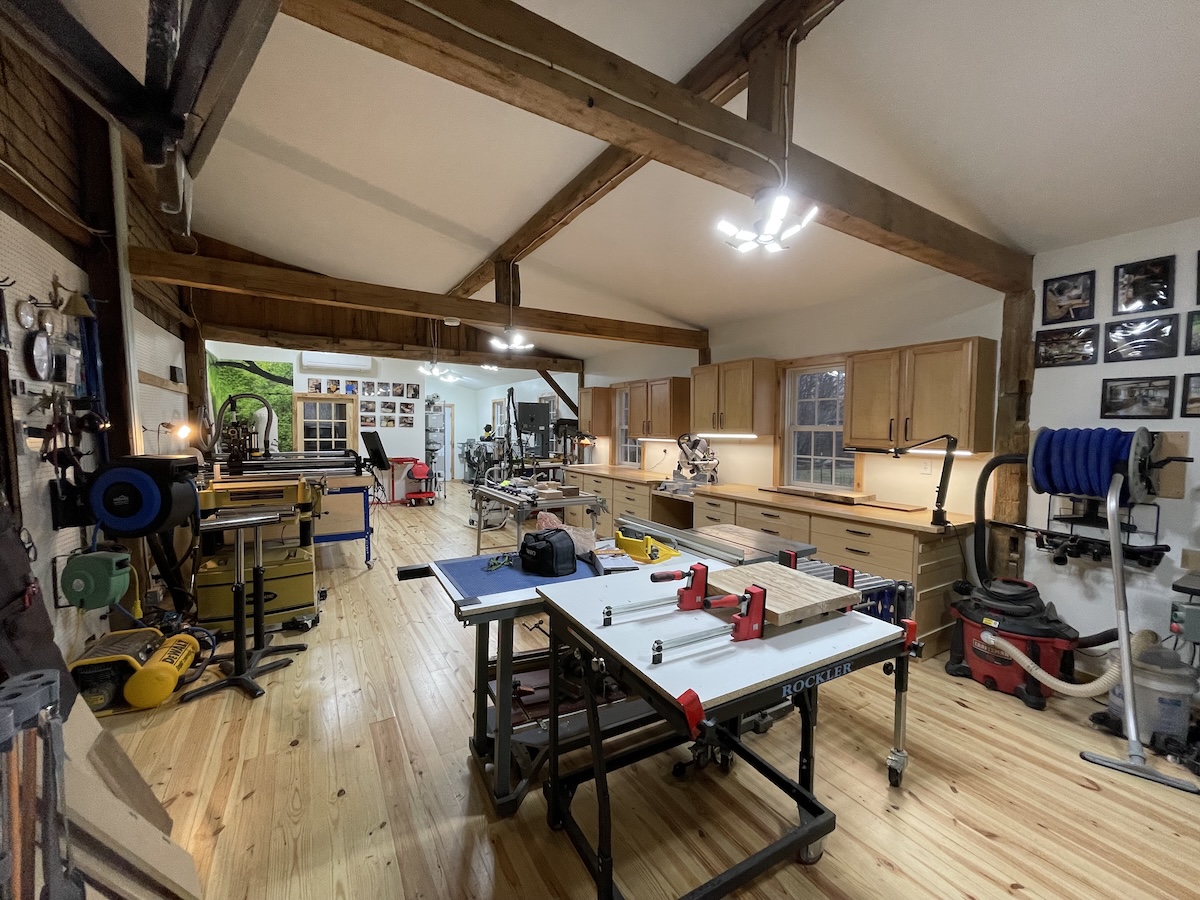
Building the perfect space for a serious hobby or side business, such as a professional woodworking shop, requires every detail to be meticulously planned—and the electrical infrastructure is arguably the most critical component. When a passionate craftsman in Ashburnham decided to significantly expand his 1800s barn to accommodate a new, state-of-the-art wood shop, he faced a complex electrical challenge. The project wasn’t just about adding power; it was about designing a fully custom electrical solution to create an efficient, safe, and versatile workspace that matched his investment in specialized, high-draw equipment.
Why Standard Wiring Fails in Custom Workshop Environments
Standard residential electrical wiring is designed for typical home use, but it simply can’t handle the heavy demands of a professional-grade workshop. High-value hobbies like advanced woodworking, home pottery studios (which often require a personal kiln), or private gyms with high-powered equipment frequently demand 240-volt circuits and high amperage that go far beyond the capacity of a standard 120-volt outlet. Trying to run specialized machinery on an inadequate or poorly configured system is a major safety hazard, risking tripped breakers and, more seriously, electrical fires. Your investment in specialized tools necessitates an equally specialized, professional electrical installation to ensure safety and optimal performance.
The Ashburnham Case Study: From Historic Barn to Custom Cabinetry Shop
Our client in Ashburnham was undertaking a major conversion of his historic 1800s barn that is part of a local bed and breakfast property. He undertook a substantial expansion, adding approximately 1,000 square feet to the structure to create his ideal cabinet-making and woodworking studio. This expansion created an immediate and significant obstacle: the original electrical service entrance was located on what was now an interior wall of the expanded structure, making it inaccessible.
Service Rotation and Panel Re-Feeding
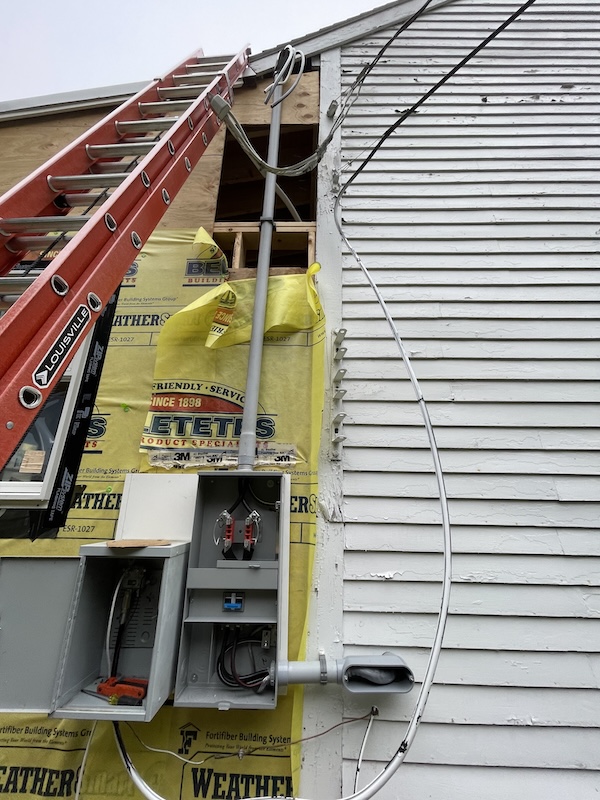 The first and most critical step was to move the existing electrical service from its old location in what became the new middle of the building to a safe, accessible outside wall. This “service rotation” required BCP Electric to re-feed the existing main panel with the new, relocated service. This complex maneuver was necessary to establish a compliant and centralized power entry point before any work could begin on the new addition.
Designing the Cord-Free, Versatile Workspace
The client’s vision for his professional shop was clear: a clean, highly versatile, and cord-free floor space. Unlike typical shops that use cord drops (extension cords hanging from the ceiling to power equipment), the client wanted all electrical connections seamlessly integrated into the floor using floor boxes. His machinery was all on wheels, meaning the power sources needed to accommodate constant reconfiguration based on the size and type of project he was working on.
BCP Electric’s Customized Electrical Solution
To deliver on the client’s vision, BCP Electric created a fully customized electrical infrastructure that prioritized power, safety, and versatility.
Installation of Custom Floor Boxes
Instead of dangling cords, the solution involved running two separate conduits underneath the floor of the newly leveled space. These conduits fed several heavy-duty floor boxes strategically placed in the center of the workshop.
Each floor box provided a dual-voltage solution:
- One 240-Volt Circuit: Essential for large, powerful equipment like a dust collection system, large saws, or a welding machine.
- One 120-Volt Circuit: Used for standard power tools, bench equipment, and charging stations.
This versatile, dual-circuit design in multiple floor-box locations allowed the client to move his wheeled equipment up and down the center of the shop and plug into the exact voltage needed without the clutter or hazard of extension cords.
Dedicated Wiring for Lighting and Amenities
In addition to the custom floor power, the project included wiring for new under-cabinet lighting to ensure a well-lit work surface, as well as a separate circuit for the main ceiling lighting. Bright, even, shadow-minimizing lighting is critical for precision and safety in any space where dangerous equipment will be in use.
The result was a stunning, professionally equipped woodworking shop where the electrical infrastructure was built to support the most demanding projects—a true example of transforming a high-value hobby space into a functional, custom environment.
Why You Should Choose BCP Electric for Your Custom Electrical Project
BCP Electric is the ideal partner for any project that goes beyond standard home wiring, such as custom workshops, detached garages, or home studios. Our expertise lies in engineering tailored solutions for complex needs, whether it’s relocating an entire service entrance or designing a fully customizable 240V/120V power grid for your specialized equipment. We ensure your electrical system is safe, compliant, and perfectly suited to your unique requirements.
Power Your Passion with a Custom Electrical Upgrade.
From service rotations to seamless under-floor wiring, we specialize in complex electrical solutions for Central MA homeowners who want to take their craft to the next level. Get the professional-grade power your tools require.
Frequently Asked Questions About Custom Workshop Electrical Upgrades
Do I need a 240-volt circuit for my workshop?
The need for a 240V circuit is determined by the specific equipment you own, as these circuits are necessary for large, high-power tools like table saws, large air compressors, welders, and dust collection systems. You must review the motor nameplate on your most power-hungry tools to find the required amperage and voltage. Wiring these motors for 240V, where possible, is highly recommended for efficiency and to reduce the amperage load on your overall service.
Is my current electrical service adequate for a new workshop or hobby addition?
Many older homes and barns have an electrical service rated for only 60 to 100 amps, which is insufficient for a modern, equipment-heavy workshop or studio. Before installing dedicated circuits for machinery, a licensed electrician must perform a load calculation to determine if your service can safely handle the new demand, which often requires a service upgrade or the installation of a new sub-panel to avoid tripping breakers and fire risks.
Are custom floor boxes a better solution than cord drops?
Custom floor boxes are designed to provide power precisely where your equipment is located while keeping the floor and ceiling clear of hazardous cords, which is critical for safety and the ability to easily move wheeled machinery. By installing dedicated conduits under the floor, as in the Ashburnham project, you can have a mix of circuits—such as 120V and 240V outlets—in the same location to accommodate various tools, offering maximum versatility and a safer, more professional environment.
When renovating or adding an expansion, is electrical service relocation necessary?
If the new construction encloses the existing service entrance or meter, that service must be moved to an accessible outside wall to meet current electrical and fire safety codes. This is a mandatory first step that involves coordinating with a licensed electrician and the utility company.
BCP Electric provides reliable, high-quality residential and commercial electrical services in the Greater Worcester area. We are licensed experts dedicated to ensuring your electrical projects, from basic repairs to complex custom installations, are completed to the highest standard of safety and quality.
This article is provided for general educational purposes only and does not replace an on-site evaluation by a licensed electrician. Electrical systems vary by home, and improper wiring or circuit loading can result in serious injury, property damage, or fire.
